
AI v AH
(All Human)


I have spent an hour this morning reading about AI and what is the point of anything anymore… ENOUGH.
I must be very very stupid, and increasingly I do feel that I understand very little of how careers are forged and fortunes made on insincerity and larceny and the clever marketing of idiocy, but HOW is it possible for a work of art to be created by an entity that cannot, by definition, have experienced real life as it is lived?
I quite often give up on recently-published books, and have come to the conclusion that it is because (in some cases) there is a degree of input from AI, which makes the whole thing feel slippery inside my head - it will not root itself there. Of course it is possible that more and more readers will come to prefer this kind of reading, because it feels more natural to them. Because real life as it is lived has become, in effect, an AI life. Then the game is up. The fatuity of much popular culture is such that AI sits very easily within it, so that is not really a problem; but the idea that it will take down the good stuff is, quite simply, the end of being human. Or, which is almost worse, we will become sort of hybrid-humans. What bothers me most is the creeping (but quickly so) acceptance that there is nothing to be done, that we have to live with it, that yes, I use AI a bit (says Anthony Horowitz) because how can I not, it is there, it is a fact, and that people like ONE are merely increasingly ridiculous for wanting no part of any of it…. Perhaps. I don’t like passivity. I recently challenged a speeding fine (my mother was in the car with me and feeling ill, so I accelerated to, wow, 35mph, to get to a garage for some water) all the way to a court hearing - pointless and ghastly, they are wholly indifferent to mitigating circs, but sometimes one has to do these things… I liked this, anyway, on AI datacentres. I like Luddites. I am also interested in the fact that alongside all this horror-show is such a powerful urge towards nature, animals, gardening, growing things, a human craving for authenticity…
On which note: I also read this morning that today is National Pub Day. My homage to the pub, The Last Landlady, has been AI-scraped, as is the fate of all our books, but I do feel a grim hilarity, alongside the outrage, given the idiosyncrasies of idiom contained within it (eg my grandmother calling instant coffee ‘a cup of rubbish’).
Whether or not one enjoys the book, and like most real things it will divide opinion, it is quite literally impossible for it to have been written by anybody but me: it is, definitively, AH.
So here’s a defiant extract.
Adobe just asked me whether I would like to ‘simplify the text’, to which I reply: ‘eff off’.
The book is being reissued at some future point, but in the meantime any paid subscriber who would like a copy do send me a message.
Cheers, fellow AHs.
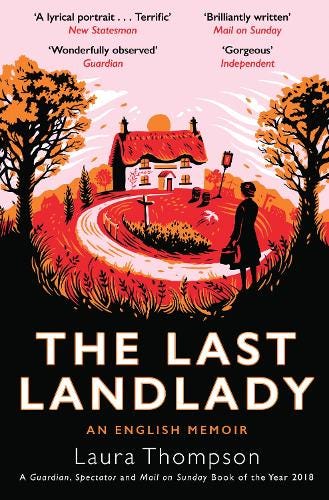
… at around ten my grandmother – sallow-faced, silk scarf over her curlers – would emerge into the bar. With the air of concentration that made one slightly wary, she prepared for opening while I watched from my place on one of the settles. She was framed like a painting by the shelf of glasses overhead and the walls to either side, and her movements were dashing, efficient, superbly womanly. She would take down the bottles that hung behind the bar, unscrew the optics and top up the contents through a funnel – Gordon’s, Bells, Teacher’s, Courvoisier, Beefeater (not that anyone ever drank Beefeater) – as a thin, spirituous smell rose into the air like a spell. Then she would cut up slices of lemon, spear cherries, tip bags of sour coppers into the huge till. Her impatient hand rubbed a pad of Duraglit over the special tankards and wiped an old dishcloth around the ashtrays, which remained damp throughout the mornings. The bar was still grey at this point, its spark unlit.
When she had applied her red lipstick, the only point of colour in the bar, she pulled back the heavy bolts on the pub doors. At the very moment of opening, the local butcher would enter in his apron.
Civilly, with an air of mild surprise at his own request, he would ask for a whisky. ‘Large one, Vi, while you’re there.’
Then he would have another double, meanwhile conversing about the weather or some such topic.
Then he would have another. Then – it was by now about 11 a.m. – he would produce an empty half-bottle from his apron pocket, and pleasantly ask my grandmother to fill it with Teacher’s. This she did, as between them the atmosphere remained that of a garden tea party. Finally the butcher would walk, with a minimally lurching gait, out of the pub, and up towards the road.
Once, after this performance, Irene had ventured the comment: ‘Drunken old bugger.’ It had not gone down well with my grandmother. The butcher, in her view, adhered to the code of the pub: he was an entirely gentlemanly alcoholic, and criticism was therefore entirely out of place.
Morning trade . . . the crack of the door-latches was always a sound of promise, but this was an extraordinary testament to the optimism generated by pubs. So often it was unfulfilled. The stage had been perfectly prepared, but the show was reluctant to take wing. The very light was uncertain of its role: the pub demanded that it dimple and glow, but pragmatic day refused to give way: the soft electric gleam behind the counter had not yet spread through the bars. They were rooms, rather than rich little treasure boxes. The air was parched. The darkness held no mystery; the wedges of sun that sliced through it showed up worn patches of carpet, ash stains, wrinkles, the creep of steel-grey at the hair roots, all the imperfections and weaknesses that the pub – in its infinite knowing humanity – was there to forgive. The thing had not yet come together… My grandmother, in her role of impresario, would march in and out from backstage, carrying cheese and gherkins with the chihuahuas pattering at her heels. The show looked like a failure, killed at birth in fact, but she was undaunted. She would assess the scene with a cool eye, as if faintly disgusted by the failure of her public to do its bit, before demanding that the music (muzak really, a bold lapse of taste) be turned up and illusions created. In the sitting room I would watch from the window, with its sumptuously sagging velvet curtains and half-covering of soft peach chiffon. And slowly, one by one, the morning regulars would come up the road, looking towards the pub as if it were their sole destiny, yet at the same time affecting a kind of nonchalance, as if they had just happened to be passing and thought, why not?
Poignant, this was. I knew it even then, although I did not know why. There were three morning customers in particular who occupied the settle in the public bar, in alliance and yet in solitude. A sad little woman with scanty permed hair who drank Double Diamond. To her left, a man with a pipe, defiant in his lack of charm. To her right, a man who communed with his pint and his Embassy as if they alone could comprehend his memories of years as a POW. The little woman smiled sweetly and humbly at everybody who passed, including the chihuahuas. She could wring five minutes’ worth of activity from asking if somebody was ‘all right’ (shifting in her seat and repositioning her Double Diamond before saying it; getting her eye in properly with the person before saying it; actually saying it – almost inaudibly, as it happened, but with the urgent mouth movements of a novice practitioner of sign language; saying it again, if there was the slightest doubt that she had been received the first time; smiling with vehement satisfaction at the reply of ‘Yes, fine’; waiting with terrible eagerness for the retaliatory ‘Are you all right?’ which occasionally failed to come; deploying ever more urgent sign language for the reply of ‘Oh, I’m all right!’; sighing and settling back in her seat; casting half-embarrassed smiles around the bar at a mission successfully accomplished; exchanging a deprecatory glance with the pipe-smoker, who would be staring at her as if she had gone temporarily mad; taking a long sip of Double Diamond in the self-conscious manner of one who had just correctly intercepted a starter question on University Challenge; winding down with a quietly agitated half-minute of glass adjustment, beer mat study and fidgeting her soft-soled shoes). She bought her round, taking her money from a purse full of Green Shield stamps, although in a gesture of grudging gallantry the pipe-smoker would go to the bar on her behalf. When it was his turn to pay he would say to her: ‘You having another one, then? You’ll be on the floor with them dogs,’ or some such thing, at which she would laugh in a bruised, brave, ‘hark at him’ way with anybody who caught her eye. When the ex-POW went to the bar he would command the attention of Irene, or whoever it might be, with a sharply mumbled: ‘Achtung!’ Back in his seat he might say: ‘What’s today? . . . Today’s Freitag.’ Other than that he barely spoke.
What were these three people doing there? Drinking, one might say: these were the days before alcohol could be bought at every pit-stop. Drinking, of course. But drink and pubs are not the same thing. Co-dependent, but different. The butcher’s desire for alcohol was clothed in a ritual courtesy, a public dimension imposed by the public house. The pub was doing something more for the threesome on the settle than selling them beer; it was assuaging something more complicated than mere loneliness.
Not that it brought pleasure, exactly. The proper pub is about far more than having a good time. It accommodates the miserable, the misfits, those who are in their seats at curtain up, having nothing in their lives to make them late: from the moment of waking, they are waiting for the moment of opening. By the fireplace in the public bar was a small table with its own stool. This was the domain of another morning regular, an old farmer with a fearsome face beneath his tweed cap, who would bang on the table with his stick when he wanted a drink. He was the only person who didn’t approach the counter. He hated everybody – although he eased off a little at the sight of my grandmother – and apparently hated being in the pub. ‘How much?’ was his response to every request for payment. ‘Can’t drink that, woman, it’s flat as a bloody pancake/got too much bloody head on it,’ was the usual reaction to his pint.
Yet his dogged appearance every day was courageous. ‘Old sod,’ my grandmother would say, when Irene reported the latest complaint about the beer, but this was token. She took him for all in all. The same thing with the threesome on the settle. ‘Poor old sods.’ She had a brisk compassion for the needy, never dirtied by the urge to patronise. So too did the livelier people who began to gladden the look of the place around midday: the exquisite mistress with the high grey chignon, giving out smiles like a film star meeting the England football team; her blazered paramour, offering drinks all round in a pantomime of manly nods and winks. With this smooth invasion, the tick-tocking strain of the morning began to ease. From the sitting room I would hear the discreet hum, punctuated by little bursts of adult laughter, signifying that the show was on the road. Now came the comfortable crunch of wheels on the car park tarmac, the generous swoop of Rovers and Jaguars. Now the morning regulars, arranged around the edges of the bar, became so many staring gargoyles. They had played their part, nevertheless: more than anybody, they proved the value of the pub, and by turning up when it would have been easier to stay cloistered at home in front of Crown Court, they earned its venial sanctuary.
‘No place like home when you’ve got nowhere else to go,’ my great-great-grandfather used to say. He had understood very well the not-quite-home essence of the pub….
One of the big problems with AI and writing is that a huge number of people (the majority?) haven't read enough to recognise it.
I couldn't agree more about the recent output of books. A large portion do feel...contrived, I guess is the word. Or made up even. Very disappointing, to a great extent, despite the bestseller label. Or maybe because of it?
The rule for recognising good AH writing is that the latter makes one resist the urge to scroll through the text, an almost automatic habit formed by everyday online reading.
You know it's the genuine article when you enjoy hearing each and every word in your head as though you were reading it out loud.